






Temporary Fence Rental Lifespan: Tips to Make Your Fence Last Longer

Andrew Hession, July 8, 2026
Read more about the author


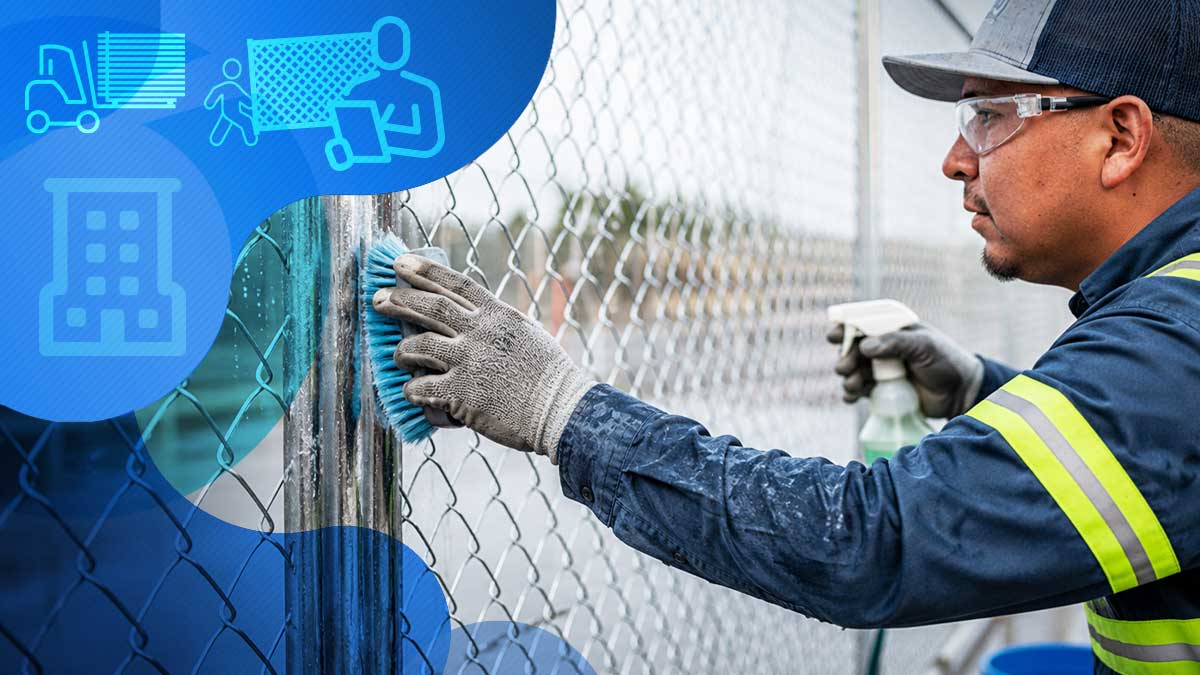
Every panel that leaves your yard and comes back damaged is a hit to two numbers at once: your utilization rate and your replacement budget.
For a branch manager, temporary fence rental lifespan isn't a maintenance footnote. It's a line item that determines whether a fence line is a high margin rental category or a slow bleeding one.
Most damage isn't caused by the jobsite. It's caused by handling, storage, and deployment decisions made before the panel ever gets anchored, and most of it is preventable with process changes that cost nothing to implement.
This guide breaks down what actually shortens a fence's service life, what protects it, and how to build that protection into your fleet's standard operating procedure.
Key Takeaways
- Track lifespan by coating type, not by a single "fence" SKU. Galvanized and powder coated panels depreciate on completely different timelines.
- Most damage happens in the yard and in transit, not on the jobsite. Storage and handling habits matter more than most crews assume.
- Wind and screened or solid panels are the leading cause of failure.
- A simple dispatch and return inspection routine catches most preventable damage before it turns into a replacement decision.
How long does temporary fencing last?
There's no single answer, because lifespan for a rental fleet isn't measured in calendar years, it's measured in turns. A panel that goes out and comes back clean can be redeployed dozens of times a year. One that gets bent, corroded, or improperly stacked might not survive a single hard winter on a coastal site.
As a general benchmark:
- Based on SONCO’s experience during more than 20 years operating a fence rental division, properly handled and stored hot-dip galvanized chain-link panels typically delivered 10 to 15+ years of service life and withstood hundreds of deployment cycles before frame fatigue or coating breakdown became the limiting factor.
- Powder-coated or thin electro-galvanized panels in active rental use typically show significant coating wear within 1 to 3 years, particularly at welds and cut edges, due to repeated loading, stacking, and outdoor exposure.
The practical takeaway for a rental operation: track lifespan by asset class and coating type, not by a blanket fence SKU. A galvanized panel and a powder coated panel depreciate on very different curves, and pricing or replacement reserves that don't reflect that will misstate true cost per rental.
Mistakes that can damage your temporary fence
Most panel damage traces back to a handful of repeatable handling errors, the kind that show up consistently across a fleet once you start tagging return conditions.
Storage
- Stacking flat panels directly on the ground traps moisture against the bottom rail and accelerates corrosion at the exact point most likely to be scratched during loading.
- Mixed storage, leaning damaged, bent, or heavily corroded panels against good stock, lets rust transfer and lets minor frame bends go unnoticed until a crew tries to couple them onsite.
- Uncovered yard storage in freeze thaw climates lets water pool in base sleeves and tube ends, then expand and crack fittings overnight.
- No rotation system. Without a first in first out approach, older stock sits at the bottom of the pile and gets forgotten, meaning it ages out of service without ever hitting a jobsite. That's dead capital sitting in the yard.
Transportation
- Overloading trailers or stacking panels beyond rated height puts torsional stress on frames that isn't visible until the panel is unloaded and won't sit flush.
- Loose load straps allow panel on panel abrasion during transit, which is one of the most common causes of powder coat chipping before a panel even reaches the site.
- No edge protection between panels during stacking lets welds and corners bite into the coating of the panel next to it.
Installation and handling
- Dragging panels instead of carrying them to save time is a fast way to scuff base rails and expose bare steel.
- Forcing couplers on misaligned panels bends the frame rather than the coupling. A bent panel then becomes a wind load liability for the rest of the run, not just a cosmetic issue.
- Skipping the pre deployment inspection means damaged stock goes out, gets blamed on the jobsite, and comes back for a warranty or damage waiver dispute that didn't need to happen.
Building a return condition checklist into your dispatch process turns these from anecdotal "the crew was rough with it" complaints into trackable data you can use to train drivers and installation crews.

Environmental Factors That Reduce Your Fence's Lifespan
Even a well handled fence is fighting the site conditions it's deployed into. Two factors do most of the damage: wind and heat or moisture cycling.
Wind
Wind is the leading cause of failure. Solid and privacy screened panels act like sails. A single under anchored section can cascade into a full line fall, and the resulting bent frames are rarely field repairable. The fix isn't just adding more sandbags.
SONCO's fence base lineup makes this easier to standardize across a fleet: Anchor Stands for pedestrian and low impact zones, Anchor Weights for wind exposed or high traffic areas, and Anchor Blocks for long runs and high load conditions. Having the right base matched to the right panel type, instead of a single default base across every job, is one of the simplest ways to cut wind related failures.
Also, panel to panel connections are usually the actual failure point, not the mesh. Undersized or single clamps let panels rack and lift before the frame itself gives way. Two clamps per connection is standard practice, and a third is worth adding in higher wind or screened installations.
If privacy screening is part of your offering, wind rated options also help protect the fence itself. For example, SONCO offers a privacy Screen with half moon wind vents that keeps around 85 percent blockage while letting air pass through the cutouts, which reduces the pressure buildup that leads to movement and tip over risk.

Heat and UV Exposure
Heat and UV exposure degrade coatings and infill differently than wind does. UV breaks down privacy screen fabric and can chalk or fade some finishes over time, especially in dark colors, while galvanized coatings are essentially unaffected by UV.
Heat cycling, hot days followed by cold nights, also stresses coupler plastics and base fittings faster than steady climates do, which is why fleets deployed in high desert or high plains markets often see base and fitting failures before frame failures.
The importance of Coating Selection
Coating selection is one of the highest leverage decisions you can make at the procurement stage, and the right answer depends on how and where the fence will be used rather than one finish being universally better than the other.
Hot dip galvanizing offers protection. If the coating is scratched, the surrounding zinc corrodes preferentially and protects the exposed steel, which is valuable for panels that get dragged, stacked, and bumped on every job, and it tends to hold up especially well in coastal, industrial, or high corrosion markets over long rotation cycles.
Powder coating brings a different set of strengths. It resists chemical splash well and performs reliably in moderate climates with lower handling frequency, which makes it a strong fit for fleets where appearance and finish consistency matter as much as raw corrosion resistance.
The main thing to plan around is that once the coating is chipped, commonly at welds or cut edges, that spot needs to be part of your inspection routine so it can be caught and addressed early.
Many rental operations run both finishes side by side, matching each to the jobs and climates where it performs best, rather than standardizing on a single coating across the whole fleet.
For a rental operation weighing coating specs against a supplier's quote, the U.S. government's Whole Building Design Guide has a useful, vendor neutral technical reference on fencing corrosion prevention that's worth reviewing before locking in a fleet wide coating standard.
Preventive maintenance: how to extend your fleet's fence lifespan
A maintenance program doesn't need to be complicated to move the needle on turns per panel.
The highest ROI habits are the ones that catch small problems before they become replacement decisions:
- Inspect on both ends of the rental, at pre dispatch and on return, not just when a customer reports a problem.
- Rinse off mud, concrete splatter, and ice melt chemicals before panels go back into storage. Residue left on galvanized coatings accelerates corrosion, and salt exposure is especially aggressive.
- Tighten and replace couplers, clamps, and fasteners as a standing line item, not an exception. Hardware fails long before frames do.
- Store panels vertically or on racks, off the ground, with airflow between stacks to prevent trapped moisture.
- Segregate damaged stock immediately on return so it doesn't contaminate good inventory or get redeployed by mistake.
- Rotate stock on a first in first out basis so no batch ages out in the yard while newer stock gets all the wear.
- Track return condition by job type and site, not just by panel. This is what tells you whether a specific customer, site type, or crew is driving disproportionate damage.
- Set a coating specific replacement reserve rather than a blanket fleet wide one, since galvanized and powder coated stock depreciate on different timelines.
Browsing SONCO's temporary fence range? View Temp Fence Products HERE.
Dos and Don'ts for Temporary Fence Rental Lifespan
| Category | Do ✅ | Don't ❌ |
| Storage | Store panels vertically, off the ground, with airflow between stacks | Stack panels flat directly on wet or muddy ground |
| Transport | Use edge protection and secure straps to prevent panel-on-panel abrasion | Overload trailers or stack beyond rated height |
| Installation | Carry panels into position | Drag panels across the ground or pavement |
| Connections | Use two (or three, in high wind) clamps per panel connection | Force misaligned couplers, which bends the frame |
| Cleaning | Rinse off mud, concrete, and de-icing salt before storage | Return panels to the yard without cleaning residue off |
| Inspection | Inspect on dispatch and on return | Only inspect when a customer flags a problem |
| Coatings | Choose hot-dip galvanized for coastal, high-corrosion, or long-rotation fleets | Assume all coatings perform the same in the field |
Build a Fence Rental Program That Lasts, With SONCO
Temporary fence rental lifespan isn't determined by the jobsite. It's determined by the decisions made in your yard, on your trucks, and at your dispatch counter, long before a panel ever gets anchored to the ground.
Coating selection, storage habits, and a consistent inspection routine are the levers that turn a fence line from a category that constantly needs reinvestment into one that quietly compounds margin, rental after rental.
If you're a branch manager, rental owner, or sales lead looking to build or sharpen a fence rental program, SONCO put together a complete resource to help you do it right from day one.
The Temp Fence Rentals Hub walks through everything from evaluating whether a rental division fits your business, to fleet management, pricing, and maximizing profit per unit.
Explore the SONCO Temp Fence Rentals Hub to get the full expert advice, along with the articles, tips, and videos that go deeper into everything covered here.

FAQs on Temporary Fence Rental Lifespan
How many times can a temporary fence panel be rented out before it needs replacing?
It depends on coating and handling more than age. A well maintained hot dip galvanized panel can go through hundreds of rental cycles over a decade or more, while a poorly handled or thinly coated panel can be down to scrap condition within a couple of years of active rotation.
Does temporary fencing need to be taken down in high winds?
Not necessarily, if it's properly anchored for the panel type in use, but privacy screened and solid panels carry significantly higher wind load than open mesh, and a run that's adequately anchored in calm conditions can still fail if wind speeds exceed what the base weight and clamp configuration were sized for.
When severe weather is forecast, inspecting and reinforcing anchoring ahead of time is standard practice.
Is galvanized or powder coated fencing better for a rental fleet?
For fleets that see frequent handling, outdoor storage, and varied climates, which describes most rental operations, hot dip galvanized panels generally hold up longer because scratches and chips don't immediately expose bare steel to corrosion.
Powder coating can be a reasonable choice for fleets in milder climates with lower handling frequency, or where appearance is a bigger factor than long term exposure.
What's the biggest avoidable cause of fence damage in a rental fleet?
Handling during loading, transport, and storage, not jobsite conditions, accounts for a large share of damage that gets attributed to the customer. Standardizing dispatch and return inspections is usually the fastest way to reduce it.
How often should temporary fence panels be inspected?
At minimum, on dispatch and on return for every rental. Fleets in coastal, industrial, or freeze thaw climates benefit from an additional periodic yard inspection, since coating and fitting degradation in those environments doesn't always track with usage.


Trend now

Temporary Fence Rental Lifespan: Tips to Make Your Fence Last Longer
Learn the storage habits that extend the lifespan of every panel.

How to Manage a Crowd at an Event: A Complete Guide for Event Managers
Learn how to manage a crowd at an event with proven strategies for planning, signage, barriers, staffing and more.

How to Install a Mesh Chain-Link Fence: Step-by-Step Guide
Learn how to install a mesh chain-link fence step by step.
Search for category
Request a quote now! 