


Temporary Construction Fence Screens: Choose the Right Type

Giuliano Marinho, August 6, 2021
Read more about the author


Temporary construction fence screens help contractors manage visibility around active jobsites, improve perimeter appearance, and communicate information to people nearby. Installed on temporary chain-link fencing, these mesh coverings can help screen equipment and materials from public view while allowing varying amounts of air to pass through.
However, not every fence screen is suitable for every construction project. The right choice depends on the level of privacy required, wind exposure, mesh construction, and how securely the screen can be attached to the fence.
This guide explains the benefits of temporary construction fence screens, compares the most relevant types, and covers the factors contractors should evaluate before installation.
Key Takeaways
- HDPE mesh and knitted mesh are practical options for construction fence screens, offering a balance of visibility blockage, airflow, and outdoor usability.
- Half-moon wind vents allow additional airflow through designated openings, helping reduce wind pressure on screened temporary fencing.
- Higher blockage does not always mean better performance. More coverage can reduce visibility but may also increase wind loading on fence panels.
- Proper installation is essential. Reinforced edges, secure attachment points, suitable fence bases, and additional stabilization help support a reliable fence perimeter.
- Screening supports jobsite management but does not replace safety controls. Construction fencing, required signage, dust-control measures, and site-security procedures must still be maintained.
Why Use Temporary Fence Screens on Construction Sites?
Construction sites often operate next to public roads, sidewalks, neighboring properties, and occupied buildings. Temporary fencing establishes a perimeter, while fence screens add a layer of visual screening that can support day-to-day site management.
Improve Jobsite Privacy
Fence screens limit direct views into active work areas, helping conceal stored materials, equipment, and ongoing construction activities from passersby.
This can be particularly useful for projects in populated areas, commercial developments, roadwork zones, and sites with limited space between the work area and public access.
However, a mesh screen is not a secure physical barrier by itself. It should be used alongside appropriate fencing, access controls, and site-security procedures.
Create a More Organized Perimeter
A consistent screen along the fence line gives a construction site a more uniform appearance. This can be useful for contractors working in residential neighborhoods, commercial districts, or
projects where the surrounding community remains active throughout construction.
A well-maintained perimeter can also make the boundary between public areas and construction operations easier to identify visually.
Support Jobsite Communication and Branding
Fence screens can display contractor logos, project information, or approved messaging. Custom printing can help identify the contractor responsible for the work and give a long construction project a more professional perimeter.
Before displaying project details or safety messaging, confirm that the content is approved and does not conflict with required regulatory signage.
Help Manage Airborne Dust and Debris
Depending on the material and mesh construction, a fence screen may help intercept some larger airborne particles or reduce the direct movement of windblown debris. Actual performance depends on the screen, weather conditions, particle size, and how the material is installed.
A fence screen should not be treated as a certified dust-control system or as a substitute for required dust suppression, containment, or environmental controls.
Types of Temporary Construction Fence Screens
For most construction applications, three options deserve particular attention: HDPE mesh, knitted mesh, and screens with half-moon wind vents.
Each offers different characteristics, so the best choice depends on the conditions at the jobsite.
1. HDPE Mesh Fence Screens
High-density polyethylene (HDPE) mesh is a common choice for temporary construction fencing. It provides a lightweight mesh construction that can reduce visibility while allowing some airflow through the fence line.
HDPE screens are useful for contractors who need practical coverage across long temporary fence runs without installing a solid covering.
Best for:
- General construction sites and temporary work zones.
- Screening equipment and materials from public view.
- Projects that require a balance between privacy and airflow.
- Contractors and rental companies managing reusable temporary fencing.
When choosing an HDPE screen, check the advertised blockage percentage, UV resistance, reinforced edges, and grommet spacing. These features influence how the screen performs during outdoor use and repeated installation.
2. Knitted Mesh Fence Screens
Knitted mesh screens use an interconnected looped construction that creates a flexible fabric with openings for airflow. Depending on the specific product, knitted mesh can provide a practical balance between visual screening, flexibility, and ease of handling.
For construction managers, the important consideration is how tightly the mesh is constructed and whether its blockage level fits the project's privacy requirements and wind exposure.
Best for:
- Temporary fence lines that require partial visual screening.
- Outdoor jobsites where airflow is an important consideration.
- Projects that need lightweight coverings for installation and removal.
- Applications where mesh flexibility and handling matter.
Not all knitted mesh screens offer the same blockage, durability, or resistance to tearing. Compare the actual product specifications rather than choosing by material name alone.
3. Fence Screens with Half-Moon Wind Vents
Half-moon wind vents are cutouts incorporated into certain fence screens to provide additional paths for air to pass through the material.
On an exposed construction site, a screen can increase the surface area resisting wind across a temporary fence line. Wind vents help address this concern by allowing air to pass through designated openings while retaining much of the screen's visual coverage.
For example, an 85% blockage screen with half-moon vents combines substantial visual screening with additional airflow openings.
Best for:
- Construction sites exposed to frequent wind.
- Long temporary fence lines in open areas.
- Outdoor projects where privacy is needed but wind loading must also be considered.
- Temporary fencing that will remain installed through changing weather conditions.
Wind vents can help reduce pressure on the fence, but they do not eliminate wind loading or guarantee stability. Fence panels must still be properly supported, and site conditions must be evaluated before installation.
Comparing Construction Fence Screen Types
| Screen type | Main characteristic | Best application |
| HDPE mesh | Lightweight mesh with varying blockage levels | General construction and temporary perimeter screening |
| Knitted mesh | Flexible construction with airflow through the weave | Jobsites where handling and airflow are priorities |
| Mesh with half-moon wind vents | Designated openings provide additional airflow | Exposed sites where wind pressure is a concern |
These categories can overlap. For example, a screen with half-moon vents may also be made from HDPE mesh. Compare the material, blockage rating, and vent design together when evaluating products.
How to Choose the Right Construction Fence Screen
Before ordering a screen for a construction project, evaluate the following factors.
1. Determine the Required Privacy Level
Start by identifying what needs to be screened from public view. A project that only needs to make stored materials less visible may have different requirements from a site where visual separation is a priority.
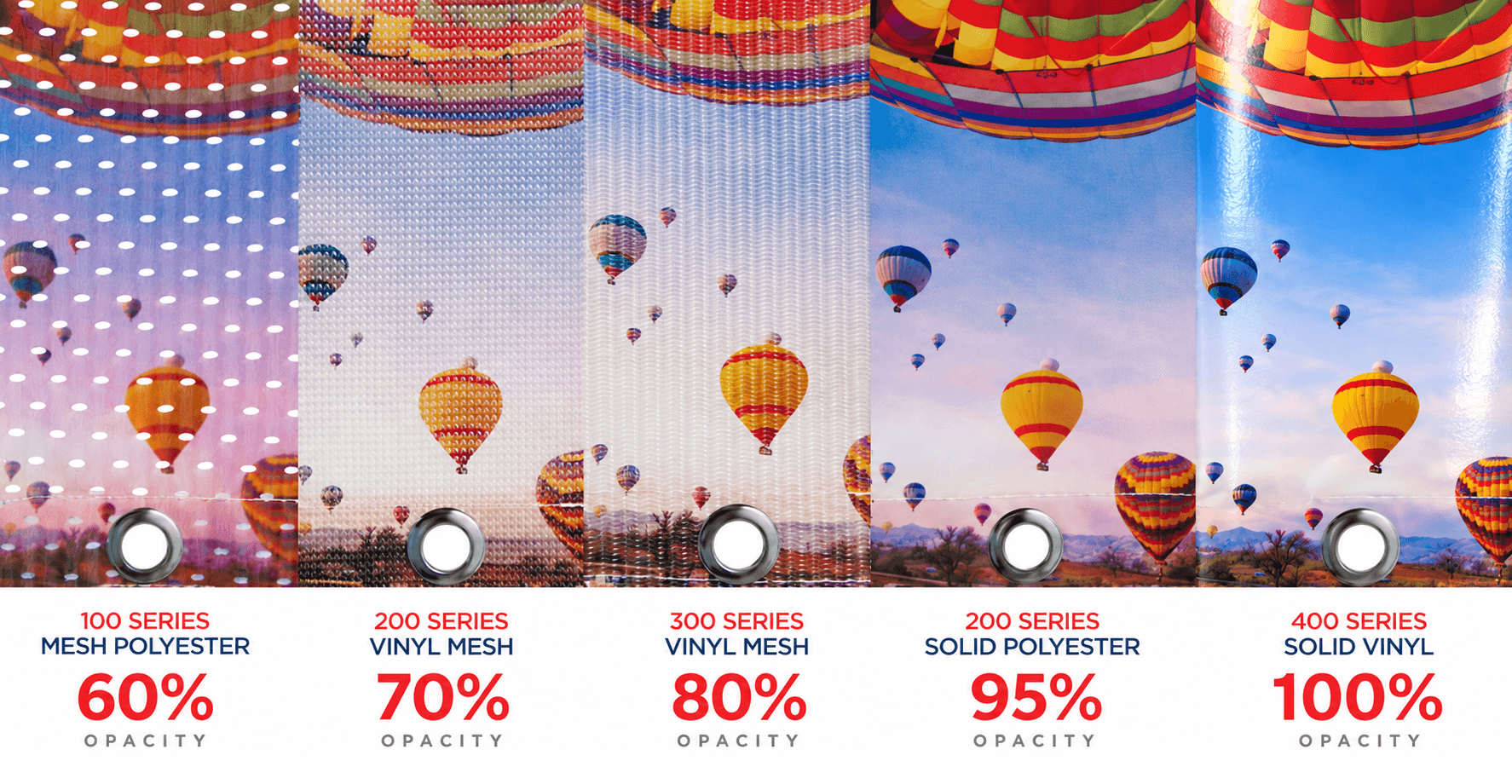
Fence screens are commonly described by their blockage percentage. In general, a higher percentage indicates less visibility through the material, while a lower percentage allows more visibility and typically more airflow.
For example:
- 85% blockage: A useful starting point when substantial privacy is needed without choosing a near-closed mesh.
- 90% blockage: Greater visual coverage for sites where concealment is a higher priority.
- 98% blockage: Near-total visual blockage, but with greater potential for wind loading than more open mesh.
These percentages describe visibility blockage, not a guarantee of wind resistance, dust containment, or security performance. Actual results depend on the product's construction and installation.
2. Evaluate Wind Exposure Before Selecting Blockage
Wind is one of the most important considerations when installing a screen on temporary fencing.
An uncovered chain-link fence allows considerable air to pass through its open structure. Adding a screen changes that behavior by creating a larger surface against which wind can act. As blockage increases, the fence line may experience greater wind loading.
Before choosing a screen, consider:
- Whether the jobsite is exposed to open fields, road corridors, or strong prevailing winds.
- The height and length of the screened fence line.
- The fence-panel design, bases, clamps, and available stabilization.
- Whether the selected screen includes wind vents.
- The manufacturer's installation guidance and applicable site requirements.
- For wind-exposed locations, a more open mesh or a screen with half-moon wind vents may be preferable to a more closed covering.
Do not assume that a particular blockage percentage makes a fence safe in every wind condition. Follow the fence and screen manufacturers' guidance, including any requirements for
additional bracing, anchoring, or removal during severe weather.
3. Check Material Durability
Construction fence screens remain outdoors and may experience prolonged sun exposure, rain, dust, repeated handling, and contact with nearby equipment.
When comparing products, look for:
- UV-resistant material for outdoor exposure.
- Reinforced hems or edges to reduce tearing around attachment points.
- Durable grommets or other specified fastening features.
- Mesh construction appropriate for the intended blockage level.
- Dimensions compatible with the temporary fence panels.
The right combination helps the screen withstand normal jobsite use, although no fabric is immune to damage from improper installation, abrasion, or severe weather.
4. Confirm Screen Dimensions and Attachment Points
Measure the fence panels before ordering. Screen height and length should match the intended coverage, with openings for gates and access points accounted for separately.
Also check how the screen will attach to the fencing. Reinforced edges and appropriately spaced grommets allow fasteners to be distributed along the perimeter rather than concentrating stress at a few points.
For temporary fencing, confirm that the attachment method is compatible with the panel design and that the screen can be installed without interfering with gate operation or necessary access.
5. Consider Custom Printing
If the perimeter also needs to identify the contractor or communicate approved project information, custom printing may be worth considering.
Before finalizing artwork, assess the mesh density, viewing distance, logo complexity, and outdoor exposure. More detailed graphics generally benefit from a sufficiently dense and even printing surface.
Keep required regulatory and safety signs visible and separate from decorative graphics when necessary.
Installing and Maintaining Construction Fence Screens
Choosing the right screen is only part of the process. Installation and ongoing inspection are equally important.
Secure the Screen Evenly
Follow the manufacturer's installation instructions and use compatible fasteners at the designated attachment points. Distribute tension evenly across the screen to reduce sagging and localized stress on the grommets.
Avoid leaving loose sections that can flap in the wind or become caught on nearby equipment.
Stabilize the Temporary Fence
Check the fence bases, panel connections, clamps, and any required bracing before installing the screen. Because screening changes the fence's exposure to wind, a setup that was stable without a screen may require additional support once the material is attached.
Use approved stabilization equipment and follow the manufacturer's recommendations for the particular fence system and site conditions. Do not rely on improvised weights as a substitute for appropriate support.
Inspect After Weather Changes
Inspect screened fence lines regularly and after significant wind or severe weather. Look for loose fasteners, torn hems, damaged grommets, displaced bases, leaning panels, and gaps in the perimeter.
If the fence shows signs of instability, restrict access to the affected area and correct the problem before returning the perimeter to service.
Keep Gates and Access Routes Clear
Make sure screens do not obstruct gates, emergency access, required signage, or visibility needed for safe vehicle and pedestrian movement.
Construction managers should also verify that screening does not conflict with project-specific requirements or local regulations.
Frequently Asked Questions About Temporary Construction Fence Screens
What is a temporary construction fence screen?
A temporary construction fence screen is a mesh covering attached to temporary fencing to reduce visibility through the fence. Depending on its material and design, it can also support jobsite appearance, branding, and limited interception of windblown debris.
What is the best fence screen material for construction sites?
HDPE mesh and knitted mesh are practical options for many construction applications. The best choice depends on the required privacy level, wind exposure, durability requirements, and installation method. For exposed jobsites, also consider screens with half-moon wind vents.
What blockage percentage should I choose for a construction fence screen?
Choose blockage based on the amount of visual screening required and the site's wind conditions. An 85% screen can provide substantial coverage, while 90% or 98% options offer greater visual blockage. Higher blockage may increase wind loading, so evaluate the entire fence setup before deciding.
Do half-moon wind vents make temporary fencing windproof?
No. Half-moon wind vents provide additional openings for airflow and can help reduce wind pressure on a screened fence. They do not eliminate wind loading or guarantee that the fence will remain upright. Proper stabilization and weather-related inspections are still necessary.
Can construction fence screens help control dust?
Some mesh screens may intercept larger airborne particles or reduce direct windblown debris movement. However, their effectiveness varies with the material, particle size, wind conditions, and installation. They should not replace required dust suppression or engineered containment measures.
Find the Right Construction Fence Screen at SONCO
Protect your construction site's privacy and create a more professional perimeter with temporary fence screens from SONCO. Explore our selection of mesh screens, including options with 85% blockage and half-moon wind vents, to find the right fit for your jobsite's privacy and airflow requirements.
Explore SONCO's temporary fence screens to find the right coverage for your next construction project.
Trend now

Temporary Fence Rental Lifespan: Tips to Make Your Fence Last Longer
Learn the storage habits that extend the lifespan of every panel.

How to Manage a Crowd at an Event: A Complete Guide for Event Managers
Learn how to manage a crowd at an event with proven strategies for planning, signage, barriers, staffing and more.

How to Install a Mesh Chain-Link Fence: Step-by-Step Guide
Learn how to install a mesh chain-link fence step by step.
Search for category
Request a quote now! 