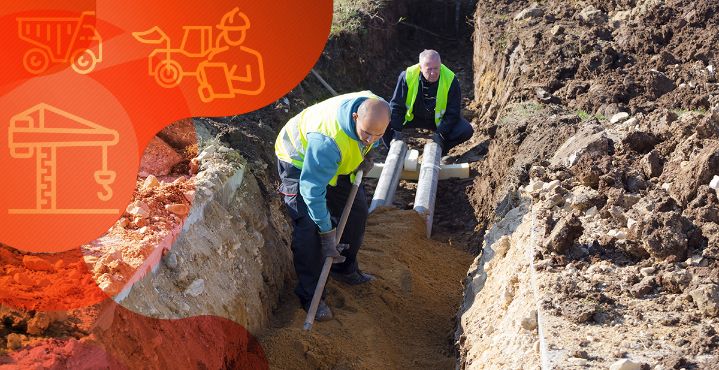
Commonly used around construction sites, utility projects, roadwork, facility maintenance, and temporary access routes, trench covers provide a temporary, load-bearing surface over open excavations, allowing pedestrians, and vehicles to cross while work continues below.
The right trench cover depends primarily on the load it needs to support, the size of the excavation, and how frequently the cover needs to be moved or repositioned.
Some models can be installed and handled by one or two people, while heavier-duty configurations are designed for higher vehicle loads.
Choose the Right Trench Cover for Your Application
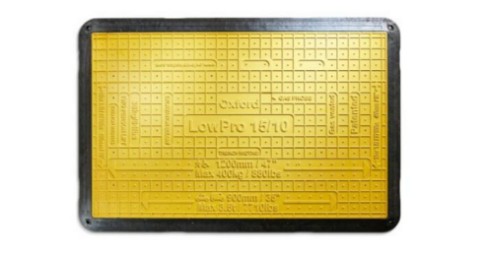
LowPro® 15/10 Trench Cover
The LowPro 15/10 is designed for pedestrian and light vehicle crossings where crews need a cover that can be handled without heavy equipment.
Supports vehicles up to 7,700 lbs
Designed for hand-liftable installation and repositioning
Lower profile than many steel alternatives
Suitable for sidewalks, driveways, and utility excavations
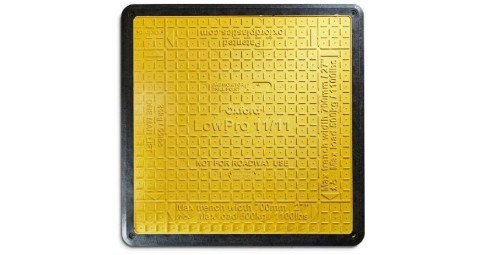
LowPro® 11/11 Trench Cover
The LowPro 11/11 provides a lighter-duty option for temporary pedestrian and vehicle crossings where portability and ease of handling are priorities.
Supports loads up to 6 tons
Suitable for short-term utility and construction applications
Easy to move and reinstall as site conditions change
Well suited to lighter-duty pedestrian and vehicle crossings
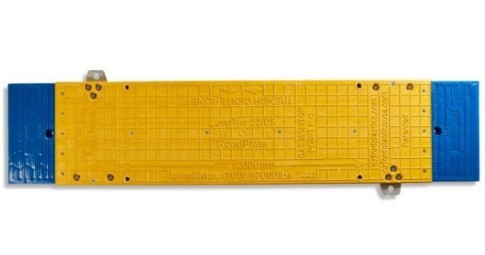
LowPro® 23/05 Road Plate
The LowPro 23/05 is designed for higher-load applications, including active roadways, driveways, and utility work involving heavier vehicles.
Supports vehicles up to 97,000 lbs
Designed for continuous vehicle traffic
Can be connected to cover longer trench runs
Suitable for road maintenance, municipal infrastructure, and heavy equipment crossings
A Better Alternative to Wood and Steel Trench Covers
Traditional trench covers such as plywood and steel plates can create practical challenges on active jobsites. Composite trench covers provide a lighter alternative that can be handled more easily while providing a load-rated surface over open excavations.
Easier to Handle Than Steel
Many trench covers can be installed and repositioned by hand, reducing the need for cranes, forklifts, or other lifting equipment.
More Durable Than Wood
Unlike plywood, these covers are designed for repeated outdoor use without the same susceptibility to warping and deterioration from moisture.
Built for Jobsite Conditions
Load-rated construction and textured surfaces provide a more practical solution for active jobsites where pedestrians and vehicles need to pass over open excavations.
Trench Cover FAQs
1. What are trench covers used for?
A: Trench covers are used to temporarily bridge open excavations so pedestrians, vehicles, or equipment can cross while construction, utility, or maintenance work continues.
2. How do I choose the right trench cover?
A: Start with the maximum load that will cross the excavation, then consider the trench dimensions, required coverage, frequency of relocation, and whether the crossing will be used by pedestrians or vehicles.
3. What is the load capacity of the LowPro 15/10?
A: The LowPro 15/10 supports vehicles weighing up to 7,700 lbs and is designed for pedestrian and light vehicle crossings.
4. What is the difference between the LowPro 11/11 and LowPro 15/10?
A: Both are designed for lighter-duty crossings, but the LowPro 11/11 supports loads up to 1.6 tons, while the LowPro 15/10 supports vehicles up to 7,700 lbs. The appropriate choice depends on the required load rating and project conditions.
5. Can trench covers be connected for longer excavations?
A: Yes. The LowPro 23/05 can be used in modular configurations to cover longer trench runs. Complete kits are also available with connecting components, ramps, and storage equipment.
6. Can trench covers be installed without heavy equipment?
A: Some models are designed for manual installation and repositioning. The appropriate option depends on the cover's weight, load rating, and site conditions.
Explore common trenching hazards, OSHA requirements, and best practice for protecting workers around open excavations, including the role of trench covers.
Learn how ground protection mats help protect surfaces from vehicle and foot traffic and how they differ from products designed to bridge open excavations.