






Water Barriers for Road Construction: Types, Uses, and Selection Guide

Andrew Hession, August 26, 2021
Read more about the author


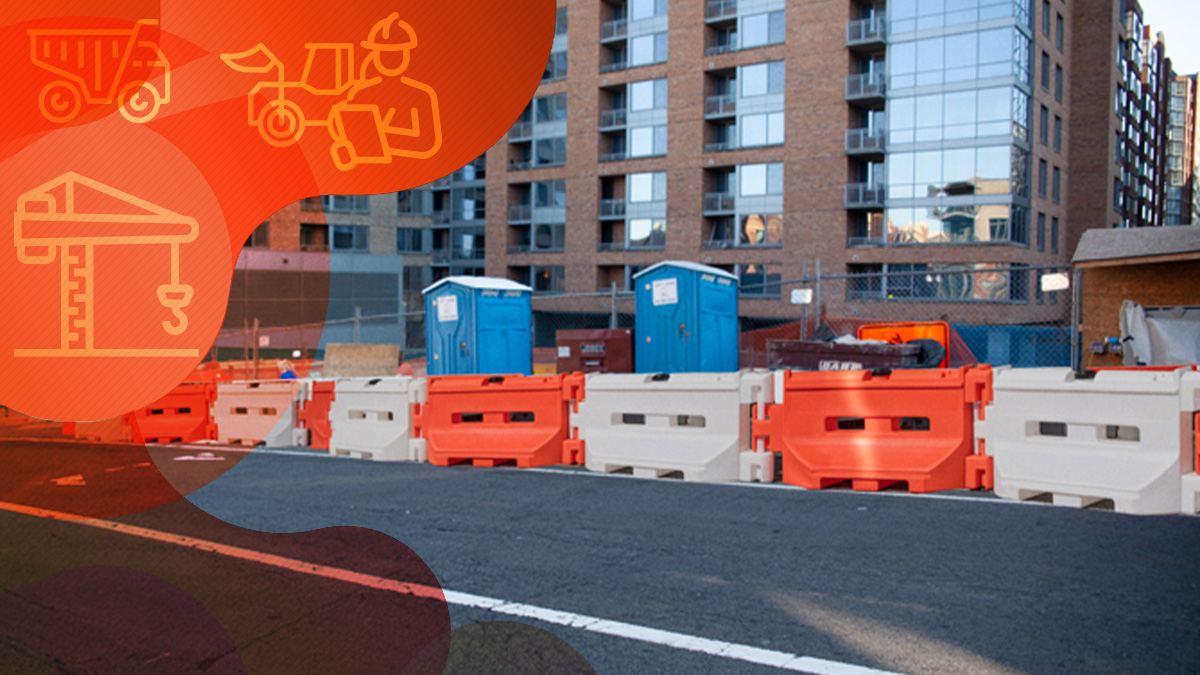
Road construction projects often require crews to work close to moving traffic, creating potential hazards for workers, drivers, and pedestrians. Establishing clear boundaries between active work areas and open roadways is an important part of work-zone traffic management.
Water-filled barriers are commonly used in temporary traffic control because they can be transported empty, filled on-site, and connected to create continuous boundaries. Depending on the model and its crash-test certification, they can support applications ranging from local roadwork to highway construction.
However, not all water barriers provide the same level of impact performance or serve the same purpose. Understanding their construction, MASH Test Levels, and installation requirements helps contractors select equipment that meets project specifications.
Key Takeaways
- Water-filled barriers help separate traffic from active construction areas and organize temporary work zones.
- Their empty weight makes transportation and handling easier before they are filled with water on-site.
- Barrier dimensions, fill capacity, connection systems, and filled weight vary by model.
- MASH Test Levels indicate the crash-test performance of specific barrier configurations and should be checked against project requirements.
- Accessories such as compatible fence toppers, connectors, and warning lights can support additional work-zone requirements.
How Do Water-Filled Barriers Work?
Water-filled barriers, also known as plastic jersey barriers or water barricades, are hollow barriers manufactured from durable plastic materials such as high-density polyethylene (HDPE) or linear low-density polyethylene (LLDPE).
They are designed to be transported empty and filled with water at the job site. Adding water increases the barrier's weight, helping it remain in position during use.
Most models include fill openings and drainage points to make setup and removal more practical. Depending on the manufacturer and design, individual units can also connect through pins, hooks, or other interlocking mechanisms to create continuous barrier lines.
The main components of a water-filled barrier include:
- Barrier body: The molded plastic structure that contains the water.
- Fill opening: Allows crews to add water during installation.
- Drain plug: Provides an outlet for emptying the barrier before relocation or storage.
- Connection system: Joins individual units to create the intended configuration.
The exact design, capacity, and connection method vary between products. Contractors should follow the manufacturer's instructions for filling, connecting, handling, and maintaining each model.

Types of Water Barriers for Road Construction
Water barriers are available in different sizes, weights, materials, and performance classifications. Choosing the right model requires understanding the conditions in which it will be used.
Some of the most important specifications to compare include:
1. Material
Most plastic water barriers are manufactured from polyethylene. HDPE and LLDPE are common materials, selected for their durability and suitability for outdoor applications.
2. Dimensions
Barrier height, length, and width affect how much roadway or work-zone area a unit occupies. Dimensions also influence transportation, storage, and compatibility with accessories.
3. Fill capacity and weight
A barrier's fill capacity determines how much water it can hold. Its filled weight is an important specification when planning transportation, handling, and deployment.
For example, the TrafFix Water-Wall Barrier available from SONCO measures 72 inches long, 32 inches high, and 18 inches wide. It holds up to 130 gallons and weighs approximately 1,004 lbs when filled.

4. Connection systems
Interlocking mechanisms allow barriers to form continuous lines and accommodate different layouts. Some models use connecting pins, while others feature integrated connectors or specialized corner units.
5. Crash-test performance
For applications involving vehicle impacts, contractors must verify the barrier's MASH Test Level and the conditions under which the specific configuration was tested.
Explore SONCO's water-filled barriers to compare available models and specifications.

MASH Test Levels: What Construction Managers Should Know
When selecting water barriers for roadway applications, crash-test performance is one of the most important considerations.
MASH stands for Manual for Assessing Safety Hardware. Published by the American Association of State Highway and Transportation Officials (AASHTO), it establishes evaluation criteria for roadside safety hardware, including longitudinal barriers.
MASH testing evaluates how safety hardware performs under specified vehicle-impact conditions. The Test Levels represent different test conditions and impact severities.
What Are the Different MASH Test Levels?
The three commonly referenced Test Levels for longitudinal barriers include:
- MASH TL-1: Covers lower-severity impact conditions and is generally associated with lower-speed roadway applications.
- MASH TL-2: Covers more demanding impact conditions than TL-1 and may be appropriate for certain intermediate-speed roadway applications.
- MASH TL-3: Covers higher-severity impact conditions and is commonly specified for higher-speed roadway applications.
These classifications should not be treated as universal speed limits or interchangeable product ratings. The applicable Test Level depends on the project, roadway conditions, and requirements established by the responsible transportation authority.
Why Does MASH Certification Matter?
A MASH Test Level indicates that a particular device configuration has undergone crash testing under the corresponding evaluation criteria.
However, a certification does not automatically apply to every barrier from the same manufacturer or every possible installation arrangement.
Before purchasing or installing water barriers, contractors should:
- Review the project's traffic-control plans and specifications.
- Identify the required MASH Test Level.
- Verify the specific barrier model's test documentation.
- Confirm that the intended connection, installation, and configuration match the tested conditions.
- Check applicable state Department of Transportation (DOT) requirements.
For additional technical information, consult the AASHTO Manual for Assessing Safety Hardware (MASH), Second Edition.
Water-Filled Barriers vs. Concrete Barriers: What's the Difference?
Water-filled and concrete barriers are both used to establish boundaries around roadways and construction areas, but they have different handling, transportation, and installation requirements.
The best choice depends on the project's duration, roadway conditions, required impact performance, and available equipment.
|
Feature |
Water-Filled Barriers |
Concrete Barriers |
|
Transportation |
Can be transported empty before being filled on-site |
Heavy units generally require specialized transportation |
|
Installation |
Filled and connected at the project location |
Typically require lifting equipment |
|
Relocation |
Can be drained before transportation and repositioning |
Requires equipment to move heavy sections |
|
Storage |
Can be drained and stored empty |
Requires space for bulky, heavy units |
|
Reconfiguration |
Available connection systems allow different layouts, depending on the model |
Reconfiguration generally requires lifting and repositioning |
|
Applications |
Temporary traffic control and work zones, depending on certification |
Temporary or permanent roadway installations, depending on design and approval |
When Should You Consider Water-Filled Barriers?
Water-filled barriers can be a practical option for projects that require temporary traffic boundaries, frequent layout adjustments, or equipment that can be transported empty.
For example, road maintenance projects may need barriers to be relocated as work progresses from one section of a roadway to another.
Their ability to be drained and transported empty can simplify handling compared with moving heavy, filled units.
When Are Concrete Barriers More Appropriate?
Concrete barriers may be appropriate for projects requiring specific rigid barrier systems, long-term installations, or configurations established by roadway engineering specifications.
Neither material is automatically safer or more suitable in every situation. Contractors must evaluate the crash-test performance of the specific product, the installation requirements, and the project's safety specifications before making a selection.
How to Choose the Right Water Barrier for a Construction Site
Selecting a water barrier involves more than comparing prices or dimensions. Construction managers should evaluate the project environment, required performance, and practical installation needs.
Here are five considerations to guide the selection process.
1. Roadway Conditions and Traffic Speed
Consider the roadway's operating conditions, traffic volume, and proximity to the active work area.
Projects involving higher-speed traffic may require barriers with more demanding crash-test performance. Always verify the required Test Level in the project's traffic-control plans and applicable DOT specifications.
2. MASH Certification
Check whether the specific barrier model has been tested for the required MASH Test Level.
Do not assume that two barriers with similar dimensions or appearances have the same impact performance.
Review the manufacturer's documentation to confirm the approved application and tested configuration.
3. Barrier Dimensions and Filled Weight
Consider how much roadway space is available and how the barriers will be transported, filled, and positioned.
Compare:
- Empty weight
- Filled weight
- Water capacity
- Height and length
- Width and footprint
These specifications help determine how many units are needed and what equipment or resources may be required for installation.
4. Connection Systems and Layout
The connection system determines how individual barriers fit together and whether they can accommodate the intended configuration.
For projects involving corners, curves, or changing work-zone boundaries, verify the available connection options and the manufacturer's approved setup instructions.
5. Accessories and Additional Requirements
Some projects require more than a basic traffic barrier.
Depending on the model, compatible accessories may include fence toppers, connecting hardware, drainage components, and warning lights.
Evaluate these requirements before purchasing to ensure the selected equipment can accommodate the intended setup.

Common Applications of Water Barriers in Construction
Water-filled barriers can be used in several construction and infrastructure applications. Their specific role depends on the barrier's design, certification, and project requirements.
Road Construction and Lane Closures
During road construction, water barriers can establish boundaries between active work areas and open traffic lanes.
They can also help define temporary traffic routes when road layouts change throughout different project phases.
Highway Maintenance
Highway maintenance projects often require temporary work zones for pavement repairs, inspections, and infrastructure improvements.
Depending on the required MASH Test Level and approved configuration, water barriers can be used to establish traffic boundaries around these activities.
Utility and Infrastructure Projects
Utility work frequently involves excavation, underground repairs, and equipment operating near public roads.
Water barriers can help define work areas and separate them from adjacent traffic or restricted sections of the site.
Pedestrian Routes Around Construction Areas
Construction projects in urban environments may need clearly defined pedestrian routes around active work areas.
Compatible barriers and accessories can help establish physical boundaries, but pedestrian access and accessibility requirements must be addressed in the project's traffic-control plan.
Water Barrier Accessories for Construction Sites
Accessories can help adapt water barrier installations to different site requirements. However, compatibility varies by manufacturer and model.
Some common options include:
Fence Toppers
Compatible fence toppers can be installed above certain water barriers to create a taller temporary perimeter.
They may be useful when a project requires additional separation or restricted access around a work area.
Always verify the approved topper and barrier combination before installation.
Connectors and Corner Units
Connectors join individual barrier sections and help maintain the intended configuration.
Some systems also offer corner units or specialized connection components for turning and adapting barrier lines.
Barrier Lights
Compatible warning lights can improve the visibility of barriers in low-light conditions.
Select lighting equipment based on the intended application and applicable traffic-control requirements.
To compare available components, browse SONCO's water barrier accessories.
Frequently Asked Questions About Water Barriers for Construction
Can water barriers be reused on multiple construction projects?
Many water-filled barriers are designed for repeated use. They can be drained after deployment, transported empty, and filled again at another location.
Proper inspection, cleaning, handling, and storage help maintain the equipment between projects. Follow the manufacturer's maintenance recommendations.
Are water barriers better than concrete barriers for construction sites?
Not in every situation. Water-filled barriers can be easier to transport and reposition because they can be moved empty and filled on-site. Concrete barriers may be more appropriate for certain long-term or engineered installations.
The right choice depends on the project's duration, roadway conditions, required impact performance, and applicable specifications.
What should contractors check before installing water barriers?
Before installation, contractors should review the traffic-control plan, required MASH Test Level, product specifications, approved connection systems, site conditions, and applicable DOT requirements.
They should also follow the manufacturer's instructions for filling, connecting, positioning, and maintaining the barriers.
Choose the Right Water Barriers for Your Construction Project
Selecting water barriers for road construction requires balancing project requirements, roadway conditions, and practical installation considerations.
From temporary lane closures to larger infrastructure projects, the right barrier depends on its dimensions, filled weight, connection system, and verified crash-test performance.
SONCO offers a range of water-filled barriers for construction and traffic control, including models with different MASH Test Levels and configurations.
Explore the available options or request a quote from SONCO to find equipment that matches your project specifications.
Trend now

Temporary Fence Rental Lifespan: Tips to Make Your Fence Last Longer
Learn the storage habits that extend the lifespan of every panel.

How to Manage a Crowd at an Event: A Complete Guide for Event Managers
Learn how to manage a crowd at an event with proven strategies for planning, signage, barriers, staffing and more.

How to Install a Mesh Chain-Link Fence: Step-by-Step Guide
Learn how to install a mesh chain-link fence step by step.
Search for category
Request a quote now! 