






Event Security Barriers: A Complete Guide to Choosing the Right Barricade

Giuliano Marinho, February 19, 2020
Read more about the author


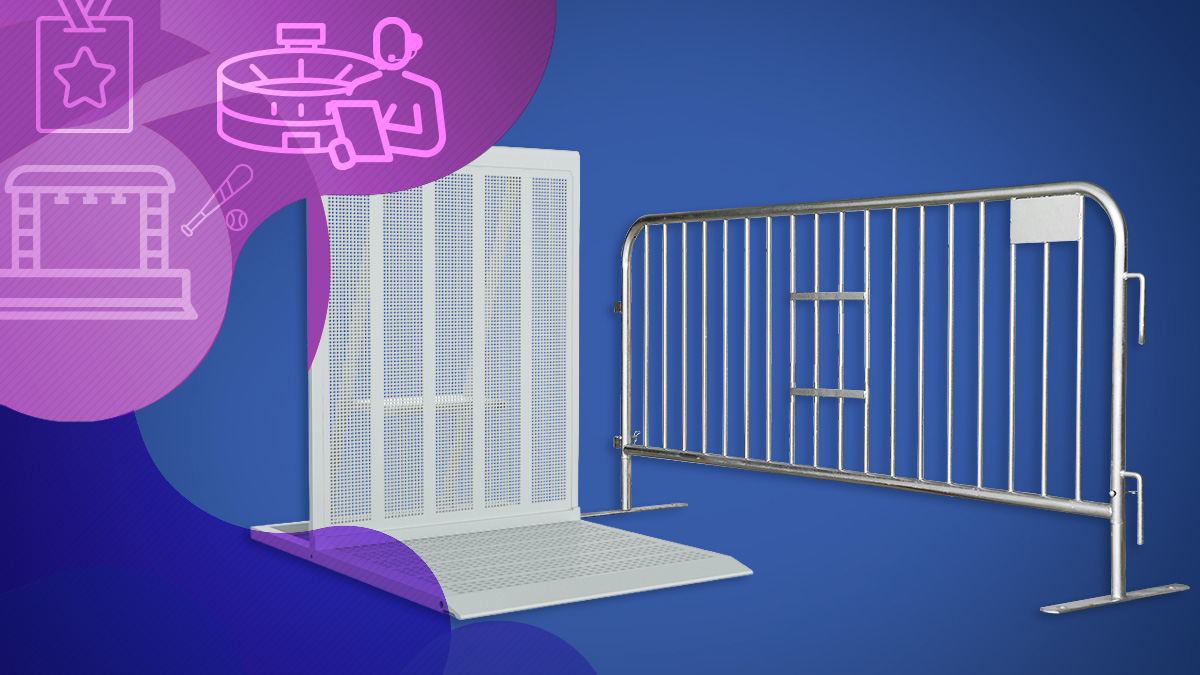
Barricade failures at festivals and concerts make headlines almost every season, usually traced back to the same root cause: a crowd, vehicle load, or impact force that exceeded what the chosen barrier was ever built to handle.
The fix isn't buying the most expensive equipment on the shelf. It's matching the right barrier to your event's footprint, your crowd's behavior, and the risks you're actually managing.
Below, we break down two of the most common barrier categories event planners choose between, the accessories that turn a barrier line into a complete access-control system, and a quick framework for deciding what belongs at your venue.
Key Takeaways
- Choosing the wrong barricade type is one of the most common, and most preventable, causes of event safety failures.
- Plastic barricades are the lightweight, budget-friendly option for indoor spaces and light-duty pedestrian guidance.
- Water-filled barricades deliver vehicle-rated, crash-tested protection for road closures, parade routes, and perimeter security where impact resistance matters most.
- Accessories like covers, gates, and bike rack barricades round out a barrier system, adding access control, branding, and flexibility.
Diferent Options of Security Barriers for Your Event
Plastic Barricades
Plastic barricades are the lightest entry point into event crowd control. Built from UV-stabilized, high-density polyethylene (HDPE), they're designed to be carried, stacked, and reconfigured by a single staff member without tools or heavy lifting. Most styles interlock or extend end-to-end to form a continuous line, and many — like expandable, wheeled units — collapse down to a fraction of their deployed length for storage between events.
Color and customization are where plastic barricades really shine. Beyond standard high-visibility yellow and gray, SONCO offers custom colors and printed panels so a barrier line can match venue branding, mark restricted zones, or display safety messaging. Several plastic barricade styles also meet ADA accessibility guidelines, making them a practical choice for queue lines and walkways that need to stay compliant as well as orderly.
Plastic barricades make the most sense when:
- The event is indoor, or outdoor with light, casual foot traffic — think retail activations, trade shows, school events, or farmers markets.
- Layouts need to change quickly between setups, or barricades need to expand and collapse for storage.
- The goal is queue management and wayfinding rather than holding back crowd pressure.
- Floor protection matters; plastic won't scratch, rust, or mark finished surfaces the way steel can.
What plastic barricades aren't built for is sustained pressure from a dense, energetic crowd. For that, event planners typically move up to steel or water-filled options, covered next.
Water-Filled Barricades
Water-filled barricades (also called water barriers or plastic Jersey barriers) are hollow HDPE units that ship empty and get filled on-site with water — or sand in freezing climates — to create ballast. The result is a barrier that travels light but deploys heavy, giving you the impact resistance of a concrete Jersey barrier without the forklifts and crane trucks concrete requires.
Most water-filled barriers on the market, including popular models from Yodock and SafeGuard, carry MASH crash-test ratings (commonly TL-2 or TL-3) and FHWA acceptance, meaning they've been tested to absorb vehicle impact at defined speeds rather than just look imposing. That crash-rated performance is what makes them the standard choice for road closures, construction zones, parade routes, and perimeter security around high-profile events or VIP areas, anywhere a vehicle could plausibly enter a space it shouldn't.
Key advantages of water-filled barricades include
- Stackable, lightweight transport when empty, with fast on-site filling through threaded top ports.
- Forklift slots for quick repositioning once filled, without extra equipment.
- Tongue-and-groove or interlocking connectors for tight, continuous perimeter lines, including curves and corners.
- High-visibility color options (OSHA orange, white, and others) for clear driver and pedestrian recognition.
- Compatibility with fence toppers, which add height and a physical security layer on top of the barrier itself.
One planning note: water-filled barriers need their ballast managed seasonally. In freezing conditions, plain water can crack the shell, so operators typically switch to a sand fill or an antifreeze mix to keep barriers serviceable year-round.
Steel Barricades
"Bike rack barricade" is the industry nickname for the classic interlocking steel barricade, earned because its vertical bar pattern resembles a bicycle rack. Built from hot-dip galvanized or powder-coated steel and connected with a simple hook-and-loop system, bike rack barricades are the workhorse of event perimeter security: durable enough for repeated outdoor deployment, heavy enough to hold a casual crowd line, and simple enough for crews to assemble and break down quickly.
For a street fest, farmers market, or any stage where the music is a bonus rather than the main draw, steel bike rack barricades are usually all the crowd control a stage needs. They're already doing double duty marking queues and restricted areas, so extending that same line in front of a stage is a natural, cost-effective fit. While SONCO's steel barricades are strong and durable enough for most general crowd control applications, they're not meant for a roaring concert crowd.
Stage Barricades
Aluminum stage barriers were designed specifically for concert venue and music festival safety. When you're protecting performers, staff, and attendees in a dense environment ripe for rowdy behavior, they're downright essential, and standard steel barricades reach their limit fast under that kind of pressure.
To decide which one your stage needs, consider the genre of music played, whether alcohol is served, and whether the crowd will gather right up against the barrier between the stage and audience. If the music is fast, the booze is flowing, and the crowd wants to be as close to the performers as possible, you absolutely need stage barriers — or risk serious injury. SONCO's StageGuard line meets American Welding Society codes and is purpose-built for exactly this scenario: protecting performers and front-row attendees under real concert pressure, not just marking a boundary.
Accessories That Complete Your Barrier System
A bare barricade line does one job: it marks a boundary. Add the right accessories, and that same line can control access, generate sponsorship revenue, and adapt to changing event needs without buying new equipment. Three categories do most of the work.
Covers
Custom-printed barricade covers and poly covers slide over both steel and water-filled barriers, turning a plain barrier run into usable vertical real estate. Event producers use them for sponsor advertising and monetization, directional signage, and brand-consistent venue dressing. Covers also do double duty as privacy screens, concealing backstage equipment, dumpsters, or staging areas from public view. Many suppliers, including SONCO, will produce the artwork in-house at no extra design cost, which makes covers one of the easiest accessories to justify even on a tight event budget.
Gates
Every barrier line needs a controlled way through it, and gate kits solve that without breaking up the perimeter. A typical gate accessory replaces a standard stand or end-post with hinges, a latch, and a wheeled foot, converting any section of barricade into a swing-open or roll-away access point. Pedestrian gate kits handle staff, vendor, and ADA access; heavier wheeled gate kits are built to swing open for vehicles, equipment carts, or emergency apparatus. Planning gate placement alongside your barrier order, rather than as an afterthought, is one of the simplest ways to avoid bottlenecks at entrances and emergency exits.
Bike Rack Barricades
"Bike rack barricade" is the industry nickname for the classic interlocking steel barricade, earned because its vertical bar pattern resembles a bicycle rack. Built from galvanized or powder-coated steel and connected with a simple hook-and-loop system, bike rack barricades are the workhorse of event perimeter security: durable enough for repeated outdoor deployment, heavy enough to hold a casual crowd line, and simple enough for crews to assemble and break down quickly.
They're also the natural pairing point for the covers and gates described above, since both accessory types are designed to attach directly to standard steel barricade sections.
The one limit worth flagging: bike rack barricades are not engineered for the sustained, high-energy crowd pressure of a packed concert front-of-stage. For that specific application, certified concert or stage-rated barriers (a different, purpose-built product class) are the safer choice — a distinction worth raising with your barrier supplier if your event includes a live performance with a dense, engaged audience.
How to Choose the Right Barrier for Your Event
With the main barrier categories on the table, the actual decision usually comes down to three questions. Walking through them before you request a quote will save time — and prevent the under-spec'd barrier choices that cause most event safety incidents.
Is This an Indoor or Outdoor Event?
Indoor events favor lightweight plastic barricades, expandable units, and stanchions: they're non-conductive, won't rust or scuff flooring, and store flat between uses. Outdoor events call for equipment built to handle wind, rain, and UV exposure over multi-day deployments, which points toward galvanized steel bike rack barricades and water-filled barriers. Multi-day outdoor festivals often combine both, plastic for indoor concession or VIP areas, steel and water-filled for the open-air perimeter.
Are You Primarily Trying to Stop Vehicles or Manage Pedestrian Lines?
Vehicle control calls for crash-rated equipment. Water-filled or Jersey-style barriers, sized to the TL rating appropriate for your risk level, are the standard for road closures, vehicle checkpoints, and perimeter security where a vehicle intrusion is a realistic concern. Pedestrian flow is a different problem entirely: bike rack steel barricades and plastic pedestrian barricades define queues, walkways, and viewing areas, with gate accessories added wherever foot traffic needs a controlled in-and-out point.
What Is Your Estimated Crowd Size?
Small, low-energy gatherings, think farmers markets or community fairs, are well served by plastic barricades alone. Mid-sized events with moderate crowd density typically step up to steel bike rack barricades for a sturdier, reusable perimeter. Large or high-energy events, major festivals, concerts, and sporting events, usually need a layered approach: heavy-duty or stage-rated barriers at the most crowd-dense points (front-of-stage, security checkpoints, entry gates) and water-filled barriers around the outer site perimeter for vehicle protection.
SONCO: Here to Protect Your Event
SONCO has spent 50 years designing, manufacturing, and supplying crowd control equipment, which means the barrier you order isn't a guess; it's backed by decades of real-world deployment data from concerts, parades, construction sites, and public safety operations across the country. With multiple warehouses positioned for fast nationwide shipping, an in-house design team for custom covers and signage, and flexible purchase and financing options, SONCO is built to outfit a single street fair or a season's worth of large-scale events.
More importantly, SONCO's team will talk through your specific layout, crowd profile, and risk factors before you spend a dollar, because the right recommendation is never just "buy more barrier."
The Bottom Line
There's no single correct barrier for every event, only the barrier that's correct for yours. Start with the three questions above, lean on plastic barricades for light indoor or pedestrian needs, water-filled barriers wherever vehicles or high-impact protection are in play, and round out the system with covers, gates, and bike rack barricades for everything in between.
Ready to build your barrier plan? Call SONCO at (888) 766-2615 or request a quote online, and our crowd control specialists will help you spec out exactly what your event needs, nothing more, nothing less.

Trend now

Temporary Fence Rental Lifespan: Tips to Make Your Fence Last Longer
Learn the storage habits that extend the lifespan of every panel.

How to Manage a Crowd at an Event: A Complete Guide for Event Managers
Learn how to manage a crowd at an event with proven strategies for planning, signage, barriers, staffing and more.

How to Install a Mesh Chain-Link Fence: Step-by-Step Guide
Learn how to install a mesh chain-link fence step by step.
Search for category
Request a quote now! 