






How Long Does It Take to Set Up a Temporary Fence Line?

Andrew Hession, September 18, 2024
Read more about the author


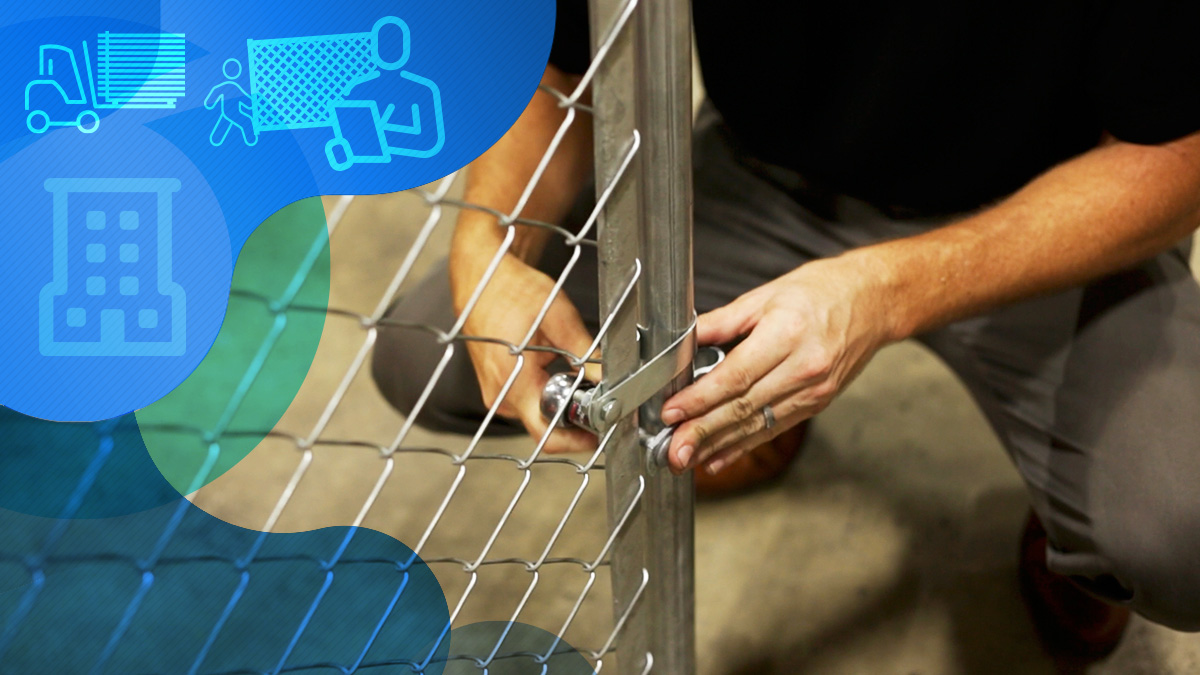
A two person crew can install roughly 250 feet of temporary fencing per hour, which means a standard 1,000 foot perimeter takes about 4 hours, and a 2,000 foot perimeter takes a full 8 hour day.
Adding installers speeds things up proportionally: a three person crew covers up to 3,000 feet in a day, and a four person crew can handle 4,000 feet. Add a privacy screen to the job, and you'll want to budget at least one extra hour and two more installers per 200 to 300 feet of fencing.
These benchmarks come from SONCO Safety Marketplace, which has spent 50 years supplying and installing crowd control and temporary fencing equipment for construction sites, special events, and government projects across the country. Whether you're a general contractor planning a job site or a fence rental company sizing up a crew, here's exactly how to estimate installation time and staffing, and how to plan for the unexpected.
Key Takeaways
- Two installers cover about 250 ft per hour of chain link fence; time scales predictably with crew size (see table below).
- Perimeter size is the single biggest variable driving both labor time and rental cost.
- Privacy screens add time and labor: budget roughly 100 to 150 ft per hour per installer, with two person crews recommended for best results.
- SONCO's temporary fence rentals pair equipment with trained, experienced installation crews so you don't have to guess at staffing.
Understanding Crew Allocation Based on Perimeter Size
You don’t necessarily need a large, dedicated crew to provide fast, reliable temporary fence installation. Logistically speaking, it only takes two people to deploy the fencing, but it’s important to consider all possible factors when allocating the right number of employees to each project:
- How long will the fence line be?
- How many hours can you assign to the project?
- Are there any additional job site details that might make installation more challenging than average?
Assess the perimeter
Perimeter size is the biggest factor in determining crew size, and it drives both installation time and the number of fence panels a job requires, along with total labor hours. Getting an accurate perimeter measurement upfront, rather than estimating, is the best way to avoid delays and keep a project within the temporary fence rental pricing a client was quoted.
Time estimates
The table below shows how many feet of chain link fence a crew can realistically install based on team size and hours on site, based on SONCO's field data from thousands of job site installations.
Rule of thumb: allocate two workers per 250 feet of fencing per hour. If a job has a tight deadline, the fastest way to accelerate the timeline is to add more installers rather than extend the hours.
| Number of Installers | 1hr | 2hrs | 3hr | 4hr | 5hrs | 6hrs | 7hrs | 8hrs |
| 2 | 250 ft | 500 ft | 750 ft | 1000 ft | 1250 ft | 1500 ft | 1750 ft | 2000 ft |
| 3 | 375 ft | 750 ft | 1125 ft | 1500 ft | 1875 ft | 2250 ft | 2625 ft | 3000 ft |
| 4 | 500 ft | 1000 ft | 1500 ft | 2000 ft | 2500 ft | 3000 ft | 3500 ft | 4000 ft |
Additional Crew Size Recommendations
A few field tested tips help even small crews stay efficient:
- Confirm all site details with the general contractor before finalizing crew size. Perimeter length, gate placement, access points, and nearby streets all affect install speed.
- Reallocate employees temporarily from other parts of the business to supplement crews on larger or time sensitive jobs.
- Coordinate multiple projects by location, delivery date, and route to save on travel time and cost, splitting larger crews across sites as needed.
- Bring more panels, bases, and anchor weights than the math says you'll need. Panels arrive damaged and perimeters get miscalculated more often than you'd expect, and knowing how to calculate the right number of fence panels before the truck leaves the yard avoids a costly second trip.

Installing Privacy Screens
Privacy screening is a natural add on for any temporary fence rental business, and offering privacy screens alongside fencing strengthens a company's position in a few ways:
- It rounds out a comprehensive equipment offering.
- It differentiates a rental company from competitors who only stock basic fencing.
- It's a genuine upsell opportunity, not just an add on fee.
For clients, privacy screens discourage theft and trespassing by blocking sightlines into the site, create a cleaner and more professional looking perimeter, and reduce wind load to protect both the fencing and the site from the elements. Many contractors also order screens custom printed to advertise their services or post required OSHA signage right on the fence line.
Privacy Screen Installation Time & Labor Requirements
Installation speed depends on perimeter length and crew size, and unlike bare fencing, privacy screens install best with at least two people working together to position and secure the material.
Planning tip: when bundling privacy screen with a fence installation, factor in at least one additional hour and two more installers per 200 to 300 feet of fencing. Double check perimeter measurements and always send extra screening material to cover miscalculations.
| Number of Installers | 1 hr | 2 hrs | 3 hrs | 4 hrs | 5 hrs | 6 hrs | 7 hrs | 8 hrs |
| 1 | 100 ft | 200 ft | 300 ft | 400 ft | 500 ft | 600 ft | 700 ft | 800 ft |
| 2 | 200 ft | 400 ft | 600 ft | 800 ft | 1000 ft | 1200 ft | 1400 ft | 1600 ft |
| 3 | 300 ft | 600 ft | 900 ft | 1200 ft | 1500 ft | 1800 ft | 2100 ft | 2400 ft |
Training and Preparation
Well trained, well prepared crews handle unexpected job site conditions far better than crews learning on the fly. Best practices include:
- Training every team member on proper fencing installation and protocols, not just full time installers, so anyone can step into a crew role when needed.
- Making sure crew members understand how to explain fencing and screening options to clients and field questions confidently.
Covering extenuating circumstances in training, including perimeters that come in bigger, smaller, or differently shaped than expected, and how to adapt installation for different fence types.
Accelerate Operations with SONCO
Accurate time estimates are only half the equation. The other half is having equipment and crews you can count on.
With 50 years of experience supplying and installing crowd control and temporary fencing solutions, SONCO has built the playbook that job sites and rental companies nationwide rely on to plan installations with confidence.
SONCO's temporary fence rental hub brings together everything covered in this guide in one place: chain link panels, bases and anchor weights, privacy screens, and custom printed options, all backed by professional installation support so your crew hits these time estimates on day one.
Ready to plan your next job site perimeter? Request a quote or contact SONCO to get started.

FAQs
How long does it take to set up 500 feet of temporary fencing?
A two person crew can install 500 feet of chain link fence in about 2 hours. A three person crew can do it in roughly 1.5 hours.
How many people do I need to install a temporary fence?
Two people is the minimum for efficient installation. Adding installers compresses the timeline: three people cover up to 3,000 feet in an 8 hour day, and four people can cover 4,000 feet.
Does adding a privacy screen slow down installation?
Yes. Privacy screens add roughly one additional hour and require two extra installers per 200 to 300 feet of fencing, since screen material takes longer to position and secure than bare panels.
What information should I gather before scheduling a fence installation?
Confirm total perimeter length, gate and access point locations, nearby streets, and whether privacy screening is needed. Accurate measurements upfront prevent delays and extra return trips.
Should I order extra fencing panels and supplies?
Yes. Always order more panels, bases, and anchor weights than your calculations suggest, since damaged panels and perimeter miscalculations are common and costly to fix mid job.
Trend now

Temporary Fence Rental Lifespan: Tips to Make Your Fence Last Longer
Learn the storage habits that extend the lifespan of every panel.

How to Manage a Crowd at an Event: A Complete Guide for Event Managers
Learn how to manage a crowd at an event with proven strategies for planning, signage, barriers, staffing and more.

How to Install a Mesh Chain-Link Fence: Step-by-Step Guide
Learn how to install a mesh chain-link fence step by step.
Search for category
Request a quote now! 