






What is Crowd Control? Importance and Best Practices

Giuliano Marinho, May 2, 2024
Read more about the author


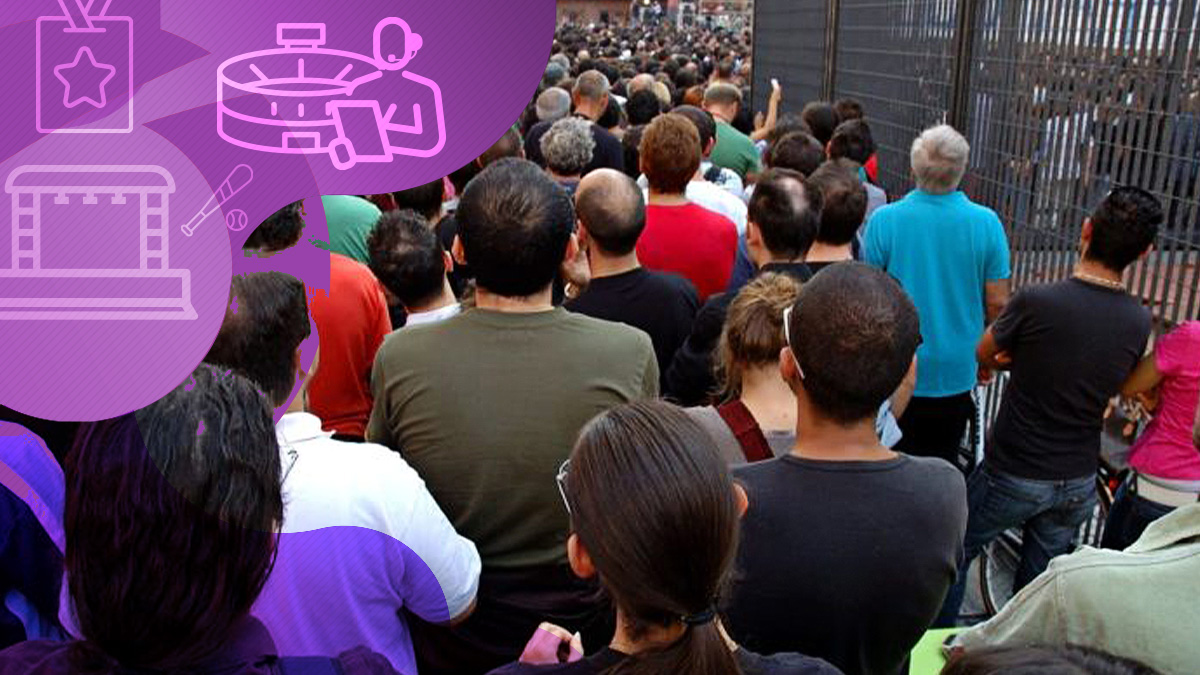
Crowd control is a critical component across a wide range of industries. From large-scale events and construction sites to retail spaces, hospitality venues, and schools, effective crowd management keeps people safe, operations running smoothly, and businesses protected.
Its applications include directing foot and vehicle traffic, restricting access to hazardous areas, and organizing queues: all essential functions that are easy to overlook until something goes wrong.
In this article, we cover the five key reasons why crowd control matters, the best practices for implementing it effectively, and common misconceptions that get in the way of a solid crowd management strategy.
Key Takeaways
-
Crowd control improves safety by directing people away from hazards and reducing injury risk.
-
It reinforces security at both temporary and permanent sites.
-
Good crowd management keeps high-traffic areas organized and accessible.
-
Well-placed signage and barriers improve visitor convenience and satisfaction.
-
Faster, better-organized crowds translate directly into increased revenue.
What Is Crowd Control in Practice?
At its core, crowd control is the practice of managing people in a way that keeps them safer, more organized, and away from restricted or hazardous areas.
Depending on the context, a crowd control solution might accomplish one specific goal, ike restricting access to a construction zone, or a combination of goals, such as simultaneously directing traffic, creating orderly queues, and reinforcing a security perimeter.
The term broadly covers any physical or logistical measure used to manage the movement and behavior of people in a shared space. That includes temporary fencing, barricades, stanchions, retractable belt barriers, signage, and traffic control products.
How does crowd control work?
Crowd control works by using physical barriers, signage, and defined pathways to guide people through a space in a predictable and safe way.
The right solution depends on the environment, the size of the crowd, the duration of the event or project, and the specific goals: whether that's safety, security, organization, or all three.
What are the three types of crowd control?
Crowd control is generally categorized into three types:
- (1) preventive measures, which involve physical products like barriers and fencing that proactively manage movement;
- (2) reactive measures, which are responses to unexpected crowd behavior or emergencies;
- and (3) informational measures, such as signage and wayfinding tools that guide people with clear communication.
Importance of Crowd Control
Whether you're managing a stadium, a construction site, or a busy retail checkout, crowd control serves a purpose that goes beyond simply keeping people in line. Here are the five most important reasons to invest in a solid crowd management strategy.
1. Superior Safety
The primary purpose of crowd control is safety. Whether it's directing foot traffic, cordoning off hazardous zones, or creating controlled entry points, the goal is to ensure that people can move through a space without putting themselves or others at risk.
The range of applications is vast. SONCO barriers are used at Daytona Motor Speedway to keep spectators at a safe distance from the track. The NYPD relies on SONCO barricades for major events like the Macy's Thanksgiving Day Parade and the New Year's Eve Ball Drop. Hotels deploy bright-yellow retractable belt barriers to protect guests from ongoing repairs. Construction sites use Jersey-style concrete barriers to shield workers from high-speed traffic.
While safety-related crowd control is often legally required, it is sometimes implemented as a voluntary precaution, depending on the industry, local regulations, and the specific risks involved.
2. Stronger Security
Security is another major driver of crowd control, and it typically falls into two categories: protecting physical assets and enforcing access protocols.
For temporary job sites with expensive machinery, materials, and vehicles, temporary fencing panels provide a cost-effective perimeter. Many of these panels include dust screens that serve double duty, reducing debris while also increasing privacy. Gates are secured with chains and locks, and panels are stabilized with cement blocks or sandbags.
In airport and event venue settings, crowd control is integral to the security screening process itself. Queue lines can be separated by clearance level, and barriers are used to funnel visitors toward checkpoints equipped with metal detectors and security personnel. Once someone passes through a "no re-entry" point, barriers make it clear (and physical) that they can't turn back.

3. Better Organization
Without crowd control, high-traffic areas can quickly devolve into confusion. Crowd management products create structure where there would otherwise be chaos: establishing clear lanes, logical pathways, and defined spaces that make it easier for everyone to navigate.
This is particularly important for accessibility. Organized environments are far easier to navigate for people using wheelchairs, mobility aids, or traveling with young children. Beyond that, a well-organized crowd reduces the risk of injury during a panic situation and makes it significantly easier for emergency personnel to reach those in need.
4. Extra Convenience
People want to get where they're going quickly and without confusion. Clear pathways and well-placed signage make that possible — and when visitors feel like the experience is smooth, their overall satisfaction improves.
Consider a few practical examples: a sign at a festival pointing toward the bathrooms from a distance saves frustration and reduces foot traffic in the wrong direction. At a sporting event, separate lines for food and alcohol keep service moving faster. A parking lot attendant directing vehicles to available sections prevents congestion and confusion at the entrance.
Small conveniences add up quickly — and they signal to visitors that the event or venue is well-run.
5. More Revenue
Efficient crowd flow doesn't just improve the experience: it directly impacts the bottom line. The faster customers can be served, the more transactions are completed. Long, disorganized queues push people away, especially at time-sensitive events where waiting in line means missing the show.
Crowd control products can also be leveraged as revenue-generating assets in their own right. Custom barricade covers build brand visibility and can generate sponsorship income. Stanchion display bowls positioned at checkout encourage impulse purchases. Custom fence screens on temporary fencing panels function like billboards, advertising products and services to pedestrians and passing vehicles.

Best Practices of Crowd Control
Knowing why crowd control matters is only half the equation. Implementing it effectively requires the right approach, the right products, and a clear understanding of your specific environment. Here are five best practices to guide your strategy.
1. Map Your Space Before Deploying Equipment
Before placing a single barricade or stanchion, walk the space and identify natural choke points, high-traffic corridors, and areas that require restricted access.
A well-planned layout ensures barriers guide people naturally rather than creating confusion or bottlenecks. SONCO's team can assist with site assessments to help you build a deployment plan before equipment arrives on-site.
2. Use the Right Barrier for the Right Application
Not all crowd control products are interchangeable. Retractable belt stanchions work well for indoor queues in hospitality and retail settings. Interlocking steel barricades are ideal for outdoor event perimeters. Jersey barriers and water-filled barricades provide vehicle-rated protection on construction sites and roads.
Temporary fencing panels with privacy screens are well-suited for construction sites where both security and debris containment are priorities. Matching the right product to the application improves both safety outcomes and cost efficiency.
3. Prioritize Clear Signage and Wayfinding
Physical barriers alone are not enough: people need to understand where to go and why. Combining crowd control equipment with clear, well-positioned signage dramatically reduces confusion and improves compliance.
Custom signage attached to stanchions or barricades can communicate entry points, restricted zones, directions, and safety instructions.
At larger venues, overhead wayfinding elements ensure visibility even in dense crowds.
4. Plan for Emergency Access and Egress
Any effective crowd control setup must account for emergency scenarios. Barriers should not block emergency exits, and pathways must remain wide enough for stretchers, wheelchairs, and emergency personnel. Temporary fencing gates should be accessible and easy to open quickly. A crowd control plan that looks good under normal conditions but fails during an emergency is not a complete plan — always review your setup with emergency egress in mind.
5. Adapt Your Setup in Real Time
Crowd behavior is dynamic, and your crowd control setup should be too. Monitor how people are moving through your space and be ready to adjust. If a queue is backing up unexpectedly, open additional lanes. If a restricted area is drawing too much curiosity, reinforce the barrier with additional signage or a secondary layer of fencing. SONCO's temporary and modular crowd control products are designed to be repositioned quickly, giving you the flexibility to respond as conditions change.
Crowd Control Misconceptions
The phrase "crowd control" carries some baggage. For many people, it conjures images of law enforcement responses to civil unrest — riot gear, mass protests, clashes with authorities. That association shapes how people perceive the term, and it's worth addressing directly.
Here's what crowd control actually is in most real-world applications:
- A safety measure, not a show of force. Jersey barriers on a highway construction site protect workers from traffic. They aren't a form of control — they're a necessity.
- A service to attendees, not a restriction on them. Barricades lining a parade route tell spectators where to stand so they can enjoy the event safely and without obstruction.
- A shared agreement, not a conflict. In 99.9% of applications, crowd control reflects a mutual understanding that everyone benefits from a safer, more organized environment.
Better described as "crowd management." That's a term we prefer at SONCO, because it more accurately reflects the intent: managing people's experience for the better, not controlling them.
The industry standard term remains "crowd control," and that's what most professionals use — but it's worth keeping the broader picture in mind when evaluating your options.
What is the role of a crowd controller? A crowd controller — whether a person, a product, or a system — is responsible for guiding the flow of people through a space safely and efficiently. In human terms, this includes security personnel, event staff, and parking attendants. In product terms, it includes barriers, stanchions, temporary fencing, and signage. In most real-world deployments, it's a combination of both.
Partner with a Crowd Control Expert
Understanding why crowd control is important is the first step. Putting it into practice — with the right products, the right layout, and the right support — is where the real difference is made.
At SONCO, our team of crowd control specialists works across industries to design and deploy effective solutions tailored to your specific needs. Whether you're managing a one-day event or an ongoing construction project, we can help you build a setup that keeps people safe, operations on track, and your site compliant.
Reach out online today to speak with a SONCO expert and get started.
Trend now

Temporary Fence Rental Lifespan: Tips to Make Your Fence Last Longer
Learn the storage habits that extend the lifespan of every panel.

How to Manage a Crowd at an Event: A Complete Guide for Event Managers
Learn how to manage a crowd at an event with proven strategies for planning, signage, barriers, staffing and more.

How to Install a Mesh Chain-Link Fence: Step-by-Step Guide
Learn how to install a mesh chain-link fence step by step.
Search for category
Request a quote now! 