






MASH Barrier: What It Is, Compliance Requirements and How to Choose One

SONCO, October 10, 2022
Read more about the author


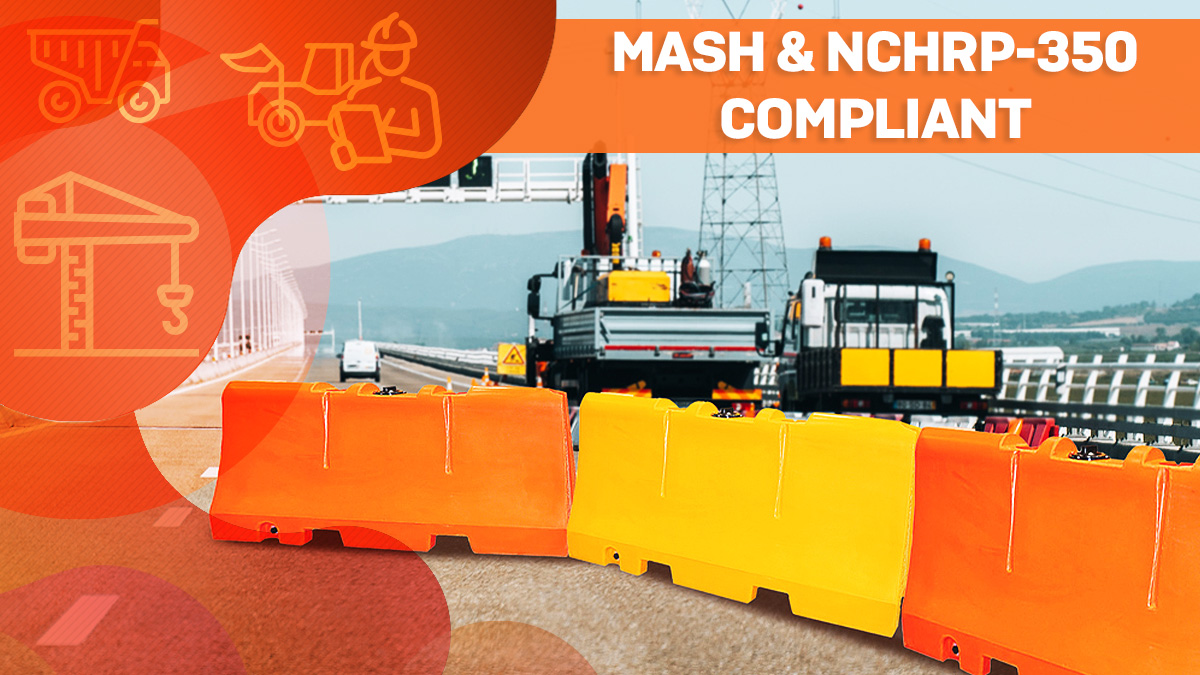
Work zone crashes are one of the most preventable causes of highway fatalities in the United States. According to the National Safety Council, 2020 saw 102,000 work zone accidents, killing 857 people and injuring over 44,000 more. The barriers you choose play a direct role in those numbers.
MASH barriers are the national standard for crash-tested highway safety hardware. Whether you're managing a highway resurfacing project, a bridge repair or a temporary lane closure, choosing the right MASH-compliant barrier is one of the most important safety and compliance decisions you'll make.
In this guide we cover everything you need to know: what MASH barriers are, how compliance works, what the test levels mean in practice, and how to choose the right barrier for your specific work zone.
What Is a MASH Barrier?
A MASH barrier is any traffic safety barrier that has been crash-tested and approved according to the Manual for Assessing Safety Hardware (MASH), the national standard for evaluating the crashworthiness of roadway safety devices in the United States.
MASH barriers are used in work zones, highway medians, roadside hazard protection and temporary traffic control applications. They're designed to redirect vehicles away from hazards, protect workers and minimize occupant injury in the event of a crash.
The key word is tested. Not all barriers on the market have been crash-tested to MASH standards. Using non-compliant barriers on federally funded projects can create compliance issues and liability exposure, which is why understanding what MASH approval actually means matters before you buy.
What MASH Compliance Means
MASH stands for Manual for Assessing Safety Hardware. It was developed by the American Association of State Highway and Transportation Officials (AASHTO) in collaboration with the Federal Highway Administration (FHWA) to establish a uniform standard for crash testing highway safety devices.
When a barrier is MASH compliant it means it has undergone a physical crash test and met the manual's criteria across three key dimensions: occupant risk, vehicle trajectory after impact, and structural adequacy of the device itself.
MASH compliance covers both temporary and permanent safety hardware including barriers, crash cushions, guardrails, bridge railings and other traffic control devices.
For any product to carry MASH approval it must be tested by an accredited laboratory and meet the specific criteria for its intended test level and application.
For construction teams and highway managers, MASH compliance is the baseline assurance that the barriers you're deploying have been independently verified to perform under real crash conditions.
MASH vs NCHRP-350
Before MASH, the national standard for crash testing highway safety hardware was NCHRP-350, developed by the National Cooperative Highway Research Program.
In 2016 MASH officially replaced it, and December 2019 was the final sunset date for NCHRP-350 compliance on federally funded projects.
The reason for the change was straightforward. NCHRP-350 was developed when the average passenger vehicle was significantly smaller and lighter than it is today. As vehicles got heavier, the old testing standard no longer reflected real world crash conditions accurately enough.
Here is what changed with MASH:
- MASH uses larger and heavier test vehicles that better reflect today's passenger car and truck fleet
- MASH incorporates varied crash angles rather than straight-on collision testing only
- MASH includes crash testing for taller barriers not covered under NCHRP-350
- MASH applies stricter criteria for occupant risk and vehicle trajectory after impact
Some states may still accept NCHRP-350 compliant products for certain non-federally funded installations, but for any project involving federal highway aid, MASH compliance is the current required standard.
MASH Test Levels Explained
MASH organizes crash testing into six test levels, each defined by the speed and type of vehicles used in the test.
The test level required for a barrier depends on the speed limit and traffic conditions of the specific roadway where it will be deployed.
Here is a breakdown of each test level and what it means in practice:
Test Level
Speed
Vehicles Tested
Typical Application
TL-1
31 MPH
Passenger car, pickup truck
Low speed roads, parking areas
TL-2
44 MPH
Passenger car, pickup truck
Local roads and ramps
TL-3
62 MPH
Passenger car, pickup truck
High speed highways and freeways
TL-4
62 and 56 MPH
Passenger car, pickup truck, single unit truck
High volume highways with truck traffic
TL-5
62 and 50 MPH
Passenger car, pickup truck, tractor van trailer
Highways with heavy truck traffic
TL-6
62 and 50 MPH
Passenger car, pickup truck, tractor tank trailer
Highest risk applications, hazardous material routes
For most construction work zones on highways and interstates, TL-3 is the minimum standard. If your project is on a road with significant truck traffic, TL-4 or higher is worth considering.
When in doubt, SONCO's traffic safety specialists can help you determine the right test level for your specific application.

Common Types of MASH Barriers
Several barrier types are available in MASH compliant versions. The right choice depends on your application, the speed of traffic and whether the installation is temporary or permanent.
Water-filled barriers
The most common choice for temporary work zones. Lightweight when empty, they're easy to transport and deploy, then filled with water on site for stability. They're ideal for lane closures, median separations and protecting workers in active construction zones. SONCO carries a full range of water-filled barriers in MASH compliant options.

Plastic jersey barriers
These follow the classic jersey barrier profile and are widely used for temporary traffic separation on highways and local roads. They connect end to end to form continuous runs and are available in various heights and colors. Browse SONCO's plastic jersey barriers for MASH approved options.
Concrete barriers
Permanent standard for highway median separation and high impact protection. They offer the highest level of vehicle redirection and are used on high speed, high volume roadways where permanent installation is required.
Steel barriers and barricades
Used where maximum durability and impact resistance are needed. SONCO's steel barricades are available in MASH compliant configurations for both temporary and permanent applications.

When MASH Barriers Are Required
Understanding when MASH compliance is mandatory versus recommended is important before purchasing barriers for any project.
Federally funded projects
They have the clearest requirement. The FHWA requires all highway safety hardware on federally funded projects to be MASH compliant. This applies to any project receiving federal highway aid, regardless of size. Using non-compliant barriers on these projects can result in loss of federal funding and liability exposure.
State funded projects
These vary. Most states have adopted MASH as their standard, but some still allow NCHRP-350 compliant products for certain non-federally funded installations. Always check your state's department of transportation guidelines before specifying barriers for a state funded project.
Private projects
The most flexible. MASH compliance is not legally mandated on private property, but following the same standards is strongly recommended. In the event of an accident, using non-compliant barriers on a private project can still create significant liability exposure.
Federal Aid and Accident Compensation
It is worth noting that MASH approval alone does not guarantee the receipt of federal aid, and some non-MASH barriers installed after 2019 may still be eligible for aid under certain circumstances.
If you have specific questions about compliance requirements for your project, SONCO's traffic safety team can help clarify what applies to your situation.
Choosing the Right MASH Barrier for Your Project
With several MASH compliant barrier types available, the right choice comes down to a few key questions.
Is the installation temporary or permanent?
For temporary work zones, water-filled barriers and plastic jersey barriers are the most practical choice. They're easy to deploy, reposition and remove. For permanent installations, concrete barriers are the standard.
What is the speed limit of the road?
This determines the minimum test level required. For roads up to 45 MPH, TL-2 is typically sufficient. For highways and interstates, TL-3 is the minimum. For roads with significant truck traffic, TL-4 or higher is recommended.
What type of traffic is involved?
A work zone on a local road with passenger vehicles only has different requirements than a highway median on a heavy truck route. The vehicle types in your traffic mix should directly inform your test level selection.
How long will the barrier be in place?
Short term deployments favor lightweight, easy to handle options like water-filled barriers. Longer term installations may justify heavier, more permanent solutions even in temporary work zone contexts.
What is your budget?
Water-filled and plastic barriers have a lower upfront cost and are reusable across multiple projects. Concrete and steel options have higher upfront costs but may be more cost effective over time for permanent or long term applications.
If you're unsure which barrier is right for your specific situation, SONCO's traffic safety specialists are available for free consultations and can help you identify the right product for your test level, application and budget.
MASH Compliant Barriers from SONCO
SONCO has been a trusted supplier of MASH compliant traffic safety hardware since 1976.
We supply construction teams, highway management companies, road contractors and municipalities across the United States with barriers, crash cushions and work zone equipment that meets current MASH and NCHRP standards.
Our MASH compliant product range includes:
- Water-filled barriers for temporary work zone applications
- Plastic jersey barriers for lane separation and traffic control
- Steel barricades for high impact and permanent applications
- Traffic control devices including delineators, cones and channelizers
Every product we supply has been independently tested and approved to meet current MASH standards.
Our traffic safety specialists are available for free consultations to help you identify the right barrier for your test level, application and budget.
Request a free quote today and we'll help you get your work zone compliant and ready.

Trend now

Temporary Fence Rental Lifespan: Tips to Make Your Fence Last Longer
Learn the storage habits that extend the lifespan of every panel.

How to Manage a Crowd at an Event: A Complete Guide for Event Managers
Learn how to manage a crowd at an event with proven strategies for planning, signage, barriers, staffing and more.

How to Install a Mesh Chain-Link Fence: Step-by-Step Guide
Learn how to install a mesh chain-link fence step by step.
Search for category
Request a quote now! 